Lacanian Psychoanalytic Psychotherapy · London E1
A space to speak,
and to be heard.
Psychoanalytic psychotherapy in English and French — in Liverpool Street, London E1, and online by Zoom. When anxiety, repeated difficulties in relationships, loss, addiction, low self-esteem or a persistent sense of dissatisfaction have started to feel like something you can’t move past on your own.
What brings people here
Most people arrive when something has become hard to carry on their own.
You don’t need the right words to begin — finding them is part of the work.
- AnxietyA constant sense of unease, panic, or dread that’s hard to put into words.
- Low mood and depressionA heaviness that won’t lift, or a flatness even when life looks fine.
- RelationshipsThe same painful patterns repeating, conflict, or a loss you can’t move past.
- Addiction and compulsionsSomething you reach for, or can’t seem to stop, that has begun to cost you.
- Feeling stuckInhibition, or the sense that life has quietly stalled.
- Low confidencePersistent self-doubt, a harsh inner critic, or the sense of never quite being enough.
What to expect
A confidential space to think aloud, at your own pace.
An initial assessment
We meet once to talk through what’s brought you, and what you’re hoping for. You can ask me anything about how I work. There’s no obligation to continue.
Ongoing sessions
Usually once a week, in person in London E1 or online. How long we work together is open, and reviewed together as we go.
Held in confidence
What you say stays between us, within a clear ethical framework. I work in both English and French, whichever you find easier to speak in.
The approach
A Lacanian orientation: this work doesn’t try to remake you into an ideal.
Rather than measuring you against a standard of “happiness” or “normality,” psychoanalytic psychotherapy takes seriously what is most particular to you — your history, your words, and your desire. It begins from a simple wager: that by speaking freely, you can come to hear what has been shaping your suffering, and loosen its hold. Symptoms are not treated simply as problems to eliminate, but as something that may have meaning. Psychoanalysis proceeds by listening closely to the way a person speaks, allowing unexpected connections and new knowledge to emerge.
The aim isn’t to turn you into someone else, but to help you arrive at something truer to you. It draws on the work of Sigmund Freud and the French psychoanalyst Jacques Lacan, and on more than fifteen years of clinical practice.
Read more about Lacanian psychoanalysis →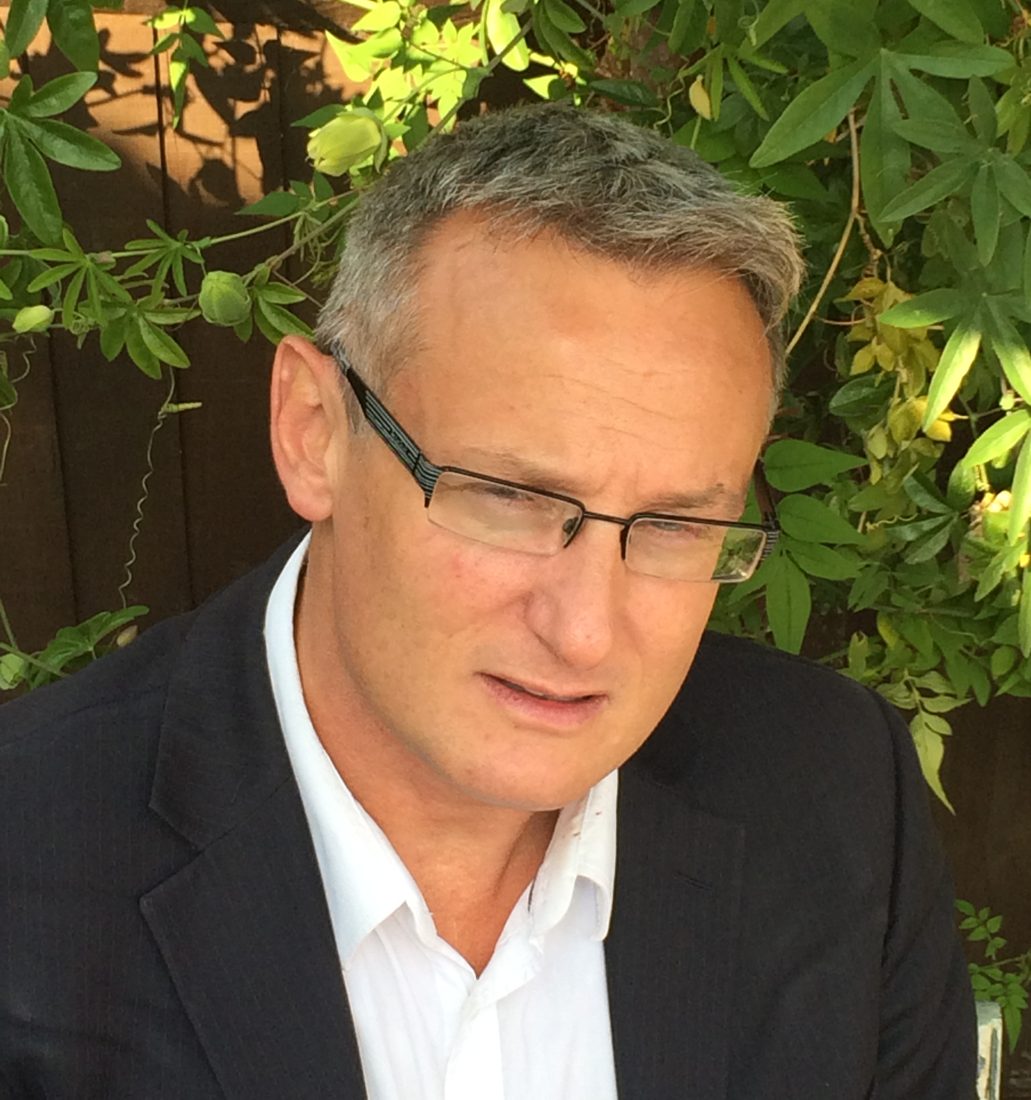
About Stéphane Preteux
A route into this work that began, unusually, in mathematics.
I came to psychotherapy by an indirect path — a degree in applied mathematics in Paris, then a few years in film visual effects in Soho, before turning toward the human sciences. That movement between languages and ways of thinking is part of why a Lacanian orientation feels like home to me.
I trained at the Metanoia Institute and WPF Therapy, and hold an MSc in Psychotherapy from the University of Roehampton. I have worked with people from many different backgrounds, including those struggling with anxiety, depression, relationship difficulties, addiction and periods of crisis. Alongside private practice, my formation has included extensive psychoanalytic training and supervision. I work both in English and French.
“Stephane Preteux’s clinical skills are very advanced. His work is fully in accordance with the highest standards in the profession and bears witness to excellent reflexivity.”
— Dany Nobus, Professor of Psychoanalytic Psychology, Brunel University London
Fees & getting in touch
Taking the first step is often the hardest part.
If you’re wondering whether this way of working might be helpful, you’re welcome to get in touch for an initial conversation.
Prefer to reach me directly?